Jakarta and Manila are only two time zones apart, yet a low-value remittance between the two capitals can still take hours and incur fees of up to 5%. Enter Project Nexus—a multilateral fast-payments “super-connector” incubated by the BIS Innovation Hub. It promises to shrink that wait-time to under 60 seconds, at a near-card-like fee.
Now in closed-loop testing between Indonesia’s BI-FAST and the Philippines’ InstaPay, Nexus is edging from blueprint to production, marking Asia’s first truly multilateral real-time retail payment link.
What Exactly Is Project Nexus?
Conceived by the BIS Innovation Hub’s Singapore Centre, Nexus aims to standardise how domestic instant-payment systems interconnect: one ISO 20022 API set, one shared proxy-ID directory, and a common rulebook—replacing today’s tangle of bilateral integrations. In its latest update (Nov 2024), the BIS confirmed that its reference architecture can deliver sender-to-beneficiary crediting “within 60 seconds in most cases.”
Five central banks: Bank Indonesia (BI), Bangko Sentral ng Pilipinas (BSP), the Monetary Authority of Singapore (MAS), Bank Negara Malaysia, and the Bank of Thailand, have agreed to form a Nexus Scheme Organisation in Singapore to oversee operations. The BIS will shift into a purely advisory role.
Why Start With This Corridor?
- Migrant-money relevance. In 2024, 230,000 Filipinos visited Indonesia, making them one of the archipelago’s top ten inbound nationalities. Small, frequent remittances dominate these routes – perfect use cases for a sub-US$500 real-time rail.
- Test-bed readiness. Both BI-FAST and InstaPay run 24/7, support proxy identifiers (e.g. mobile/email), and launched post-2018—free from legacy system constraints.
- Regulatory ambition. BI’s BSPI 2025 blueprint prioritises “fast, cheap, affordable, easy, safe and reliable” cross-border payments. BSP’s roadmap targets 50% digital payment penetration by 2026. Nexus hits both targets.
Economics: Cheaper Than Cards, Faster Than SWIFT
- Fee optics. BSP modelling suggests landed costs would be way below the rates endorsed by G20 nations.
- Speed delta. While SWIFT transfers typically take 1–5 business days, Nexus pilots settle in under 60 seconds.
- Tourism uplift. A shift toward QR payments among tourists could result in significant savings on foreign exchange and hidden card fees.
Competitive Ripples to Watch
- Card schemes: Visa and Mastercard already face A2A pressure in Malaysia–Singapore. A live ID-PH QR rail could accelerate scheme-free checkout across ASEAN.
- Super-apps: Grab’s digital bank just reported its first profitable quarter, largely from payments and lending. Nexus-native QR rails could boost cross-border wallet use.
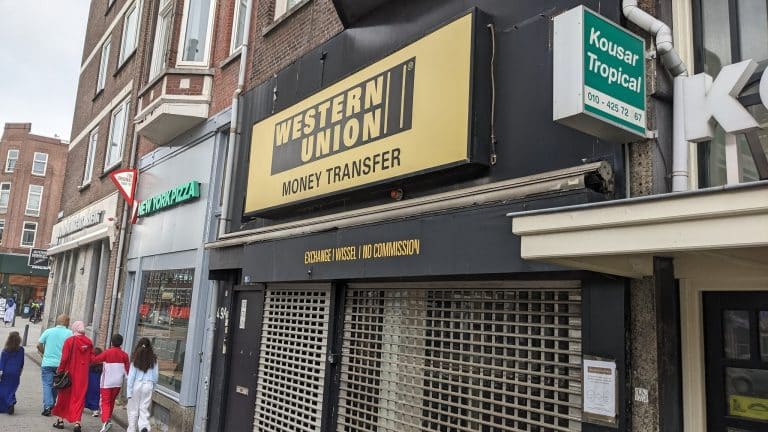
- Money-transfer giants: Western Union and Ria rely on the migrant lanes that Nexus is targeting. Expect them to double down on cash-out infrastructure and compliance services.
Bottom Line
If the Indonesia–Philippines pilot stays on track, Project Nexus could process real cross-border retail traffic well ahead of the G20’s 2027 goals. For Bali beach vendors and Manila sari-sari stores, that means settling foreign transactions at local MDRs. For policymakers, it’s a proof-of-concept: multilateral beats bilateral.
Even with just its first wave of participants, Nexus has the potential to connect a market of 1.7 billion people—unlocking fast, affordable, and inclusive cross-border payments at scale. Whether measured in minutes or basis points, money in ASEAN is about to move at the speed of a text—and Nexus is ready for takeoff.