
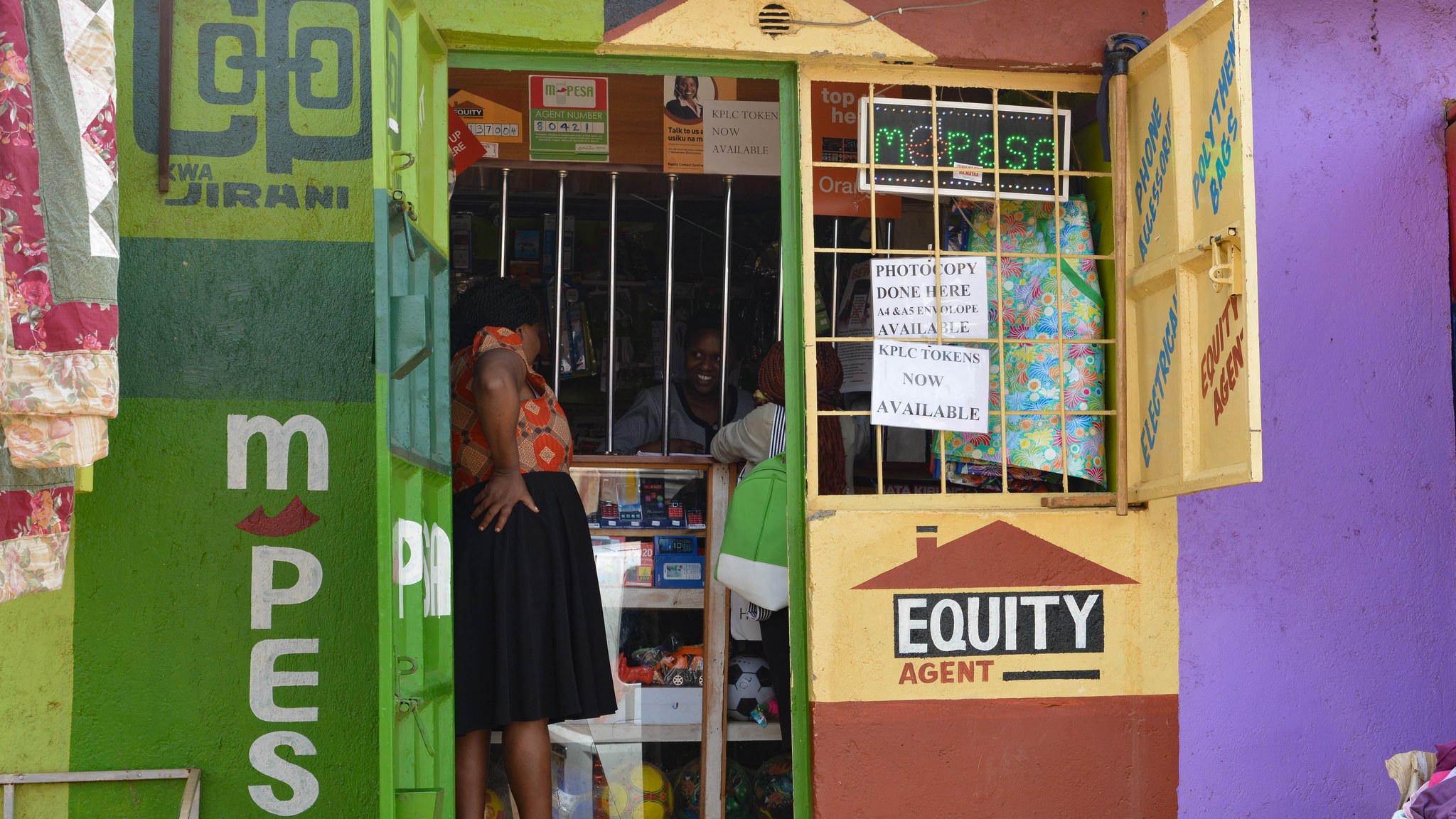
Kenya’s draft wallet float bill, formally the National Payment System Bill, has been read as a fight over whether M-Pesa users should earn interest. The more immediate effect is quieter. By rewriting where trust money can sit and loosening the rule on where its income goes, the bill turns a sum nobody publishes into a number every stakeholder will now try to claim.
The National Treasury and the Central Bank of Kenya published the draft National Payment System Bill on September 21, with comments due by October 9 to the CBK’s review address.
The free money is worth up to KES 15 billion a year
Customer balances in M-Pesa have never belonged to Safaricom, and their income has never belonged to customers. Since the 2014 regulations, trust income “shall” be donated to a public charity, which for M-Pesa means the M-Pesa Foundation.
The balance is large. When Vodafone sold its stake in M-Pesa’s trust operator in September 2023, customers were owed about KES 171 billion, or €1.16 billion. At the CBK’s 91-day rate of 8.778% on October 5, that would earn about KES 15 billion a year. At the 3.54% average savings rate it would earn about KES 6 billion. No one publishes the actual figure, and tech-ish, which produced the range, says so.
For scale, Safaricom reported M-Pesa revenue of KES 182.7 billion and group net income of about KES 100 billion for the year to March 2026. The float income is 3% to 8% of M-Pesa’s revenue. It is free money in the plain sense: it costs the operator nothing to generate and goes to no one who uses the service.
The wallet float bill fixes the investment and leaves the income open
Clause 36 of the Treasury’s draft requires customer money to be held in trust at licensed banks or microfinance banks, subject to limits in the bill’s Fourth Schedule, and invested only in Kenyan government securities or interest-bearing trust accounts. The trust may never hold less than customers are owed. Clause 37 bars commingling.
That matters more than it looks. The 2014 rules already let trustees use banks or government securities. The draft requires the whole float to earn: government paper or an interest-bearing trust account, with no room for idle balances. With the 91-day bill at 8.778% against a 3.54% average savings rate, trustees have a reason to favour bills, and the Fourth Schedule limits would spread the bank balances that remain across more institutions. Kenyan banks could lose a cheap source of funding, and the Treasury would gain a steady buyer for its paper. In effect the bill makes sure the money earns before deciding who receives it.
Clause 40 handles the income. It says trust income “may”, with CBK approval, go to charity “or such other purpose as may be prescribed.” That keeps the charity model available, opens the door to customer payouts and leaves the choice to future regulations.
Every claimant now has a number
Former governor Patrick Njoroge has already made the case for customers, calling the charity rule “a holdover from the industry’s nascent phase” and pointing to Tanzania, Uganda and Ghana, where customers receive the income. In Tanzania, the central bank steered income to customers from 2014 and found no evidence of the deposit flight banks had warned of. Uganda’s 2020 law requires payouts; MTN paid UGX 5.7 billion for one quarter in 2022.
The M-Pesa Foundation will argue for continuity. Banks will argue against an investment rule that drains deposits. Safaricom, which earns nothing from the float today, can support payouts at no direct cost to its income, and it already sells a separate money market fund, Ziidi, through M-Pesa. Airtel Money, listing in London on October 14, holds a small share of Kenyan balances but faces the same rules.
The bill also raises e-money issuer capital from KES 20 million to KES 250 million, a cost smaller operators will feel more than Safaricom.
Bottom line
The float bill puts a price of roughly KES 6 billion to KES 15 billion a year on balances that have earned money for no one in particular since 2007. The investment rule is the change that will move money first; the income rule is the one that will be fought over. Kenya still lacks the one number the debate needs: what the trusts actually earn.
Watch for:
- Submissions filed by October 9 from Safaricom, the Kenya Bankers Association and the M-Pesa Foundation
- Whether “may” survives in the bill sent to Parliament
- Any CBK disclosure of trust income