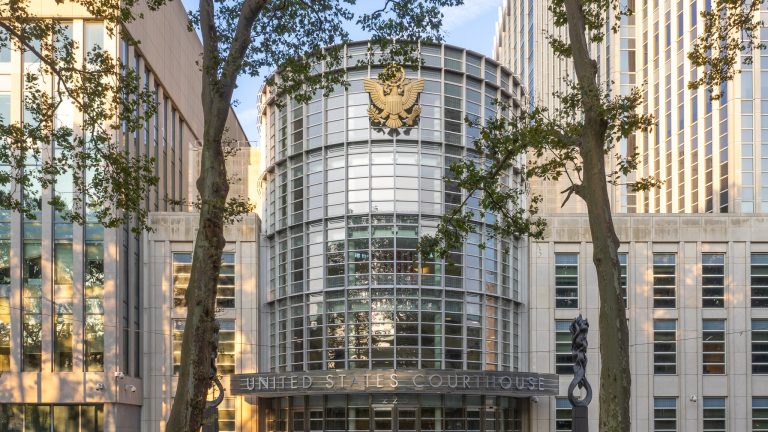
A three-judge Eighth Circuit panel ruled on October 26 that the Federal Reserve set its debit card fee ceiling unlawfully, and affirmed the order vacating the 21-cent cap in Regulation II. The Fed debit interchange cap now has to be rebuilt from the cost a bank incurs on one additional transaction, a test that rules out the fixed costs the Fed counted in 2011. The largest US card issuers hold the revenue that the next number will decide.
The court read incremental cost as marginal cost
The Durbin Amendment tells the Fed to consider the “incremental cost” of authorizing, clearing and settling “a particular electronic debit transaction” and to ignore costs not specific to one. The Fed read the second category narrowly and folded in fixed processing costs, network fees, fraud monitoring and fraud losses. Judge David Stras, writing for the panel, held that incremental cost means marginal cost, and that hardware, software, labor and network-connectivity costs that are fixed for a bank cannot be considered. It “does not take much detective work” to reach that reading, he wrote. A proxy such as average variable cost is allowed, but “at a minimum” the Fed must sort costs into those that are transaction-specific and those that are not.
The panel also took issue with the shape of the rule. The statute asks for “standards”, plural, and the Fed set one uniform cap of 21 cents plus 0.05% of the transaction and a one-cent fraud adjustment. Corner Post, the North Dakota truck stop and convenience store that sued in 2021, argued in May for tiers by asset size, volume and geography, Courthouse News reported.
The Fed debit interchange cap was already above the Fed’s own cost data
The Fed’s own numbers show how far a marginal-cost rule could fall. Its 2023 proposal put the transaction-weighted average of covered issuers’ base costs at 3.9 cents in 2021, down from 7.7 cents in 2009, and that figure still included the fixed costs the court has now excluded. The Fed then multiplied 3.9 cents by 3.7 to reach a proposed base of 14.4 cents, so that issuers would recover full cost on 98.5% of transactions. A multiplier built so that almost every bank recovers in full sits awkwardly next to an opinion that cites rate-setting without “evaluating the separate financial position of each member”.
That proposal would have cut the fee on an average $50 transaction from 24.5 cents to 17.7 cents, the Fed said in October 2023, and it was never finalized. The Fed declined to comment on the ruling, Payments Dive reported.
The $10 billion line becomes a wider gap
Only issuers with $10 billion or more in assets are capped. In 2024, covered transactions earned an average of 23 cents and exempt transactions 51 cents, according to the Fed’s network data, and covered transactions were 60.7% of the total. A lower cap pushes the covered average down while the exempt side stays where the networks price it, so the gap between a large bank and a community bank widens. GL Insight has written about how the same $10 billion line shapes stablecoin charters.
The trade groups say the exemption does not protect small issuers in practice. America’s Credit Unions said community institutions “inevitably absorb the marketplace fallout” when interchange falls, in a statement on October 27. Six bank and credit union groups said in a joint statement that the ruling stops regulated fees “reflecting the real costs banks incur”. The Merchants Payments Coalition, citing the Nilson Report, puts 2025 debit swipe fees at $40.5 billion.
Merchants also have routing to work with. In Australia, the surcharge ban has made least-cost routing the next fight for merchants, and the US has gone the other way on card surcharging. New Zealand capped commercial card interchange on October 22, so the ruling lands in a month when two other markets reset card prices.
Bottom line
The ruling does not take effect until the court issues its mandate, seven days after the 45-day window to seek rehearing, so the 21-cent cap stands into December at the earliest. After that the Fed has to write a cap from marginal cost, and its own 3.9-cent average, which still counts fixed costs, sets a high-water mark for the starting cost. More cards and networks coverage sits on the GL Insight hub.
Watch for:
- A petition for rehearing by the Fed or the bank amici
- The Sixth Circuit ruling in Linney’s Pizza, which could create a circuit split
- Whether the Fed reopens its 2023 proposal or starts a new rulemaking